Your B2B SaaS Positioning Consultant Should Get Out of the Deck and Into the Sales Call
A good SaaS positioning consultant makes your product fit the client's problem. If the work dies in a deck, you've bought a sketch of a suit.
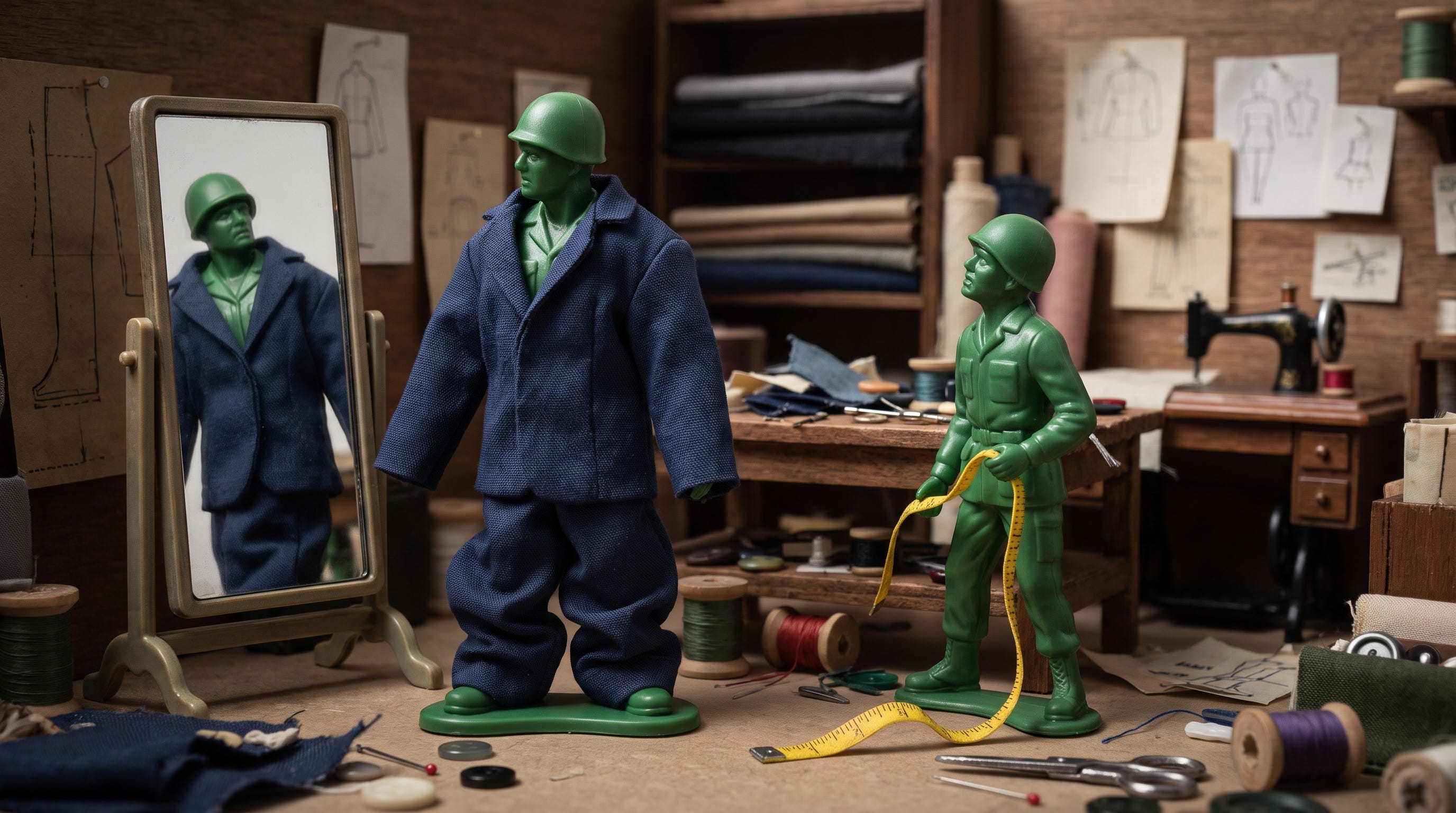
You’ve seen the suit.
The shoulders sit where they shouldn’t.
The sleeves swallow the client’s hands.
Or the whole thing looks one deep breath away from disaster.
That’s what your buyer looks like inside bad positioning.
They’re trying to wear your product description, and it doesn’t fit their problem.
You’re talking about a platform. They’ve got a quota.
You’re explaining an agentic workflow. They need to get a report out before their boss starts asking questions.
And you’re still surprised when the deal dies.
What does a B2B SaaS positioning consultant actually do?
A good SaaS brand strategist finds the person with a problem that's expensive enough to fix and urgent enough to fix now. Then they work out why that person should believe you’re the right choice.
That takes customer interviews, lost deal reviews, sales recordings, and the objections your reps hear every week.
It doesn’t take another workshop where everyone agrees the company is innovative.
I call the buyer at the center of this the Panic Persona.
They’re the person whose quarter blows up if your product stops working.
Their name is on the outcome. Their boss sees their missed number.
If your marketing guy comes back to you with an industry, a company size, and a persona named Marketing Mary, they’ve measured the wrong body.
Once the buyer and pain are clear, the consultant has to change the way you sell. The homepage, demo, deck, qualification, and battlecards all have to tell the same story.
If your rep still has to invent a new pitch every time your prospect pushes back, the work isn’t done - or at least, it’s not done well.
When should you hire a B2B SaaS positioning consultant?
Bring somebody in when the product works and the story still collapses in the deal.
When your prospect likes the demo, then goes quiet. When your reps each invent their own pitch. When your champion can’t explain the purchase to their CFO.
Those are fit problems.
Don’t bring somebody in to sprinkle better adjectives over a decision you’re avoiding.
If you won’t narrow the buyer, name the pain, or walk away from bad-fit deals, a consultant can’t save you.
They’ll only make your indecisions sound more expensive.
Give them access to customers, lost deals, sales calls, and the people who deliver the work.
Without that, they’re guessing your measurements from across the room.
Why does the sales call matter so much?
The sales call is where the client moves around in the suit.
They lift an arm, and you find out the shoulders are wrong.
“We already have a tool for that.”
“This feels like a reporting problem.”
“I like it, but I can’t get this past finance.”
Each objection shows you where the argument doesn’t fit.
Maybe the category is too broad. Maybe the pain is too small. Maybe you’ve aimed at a user who feels the problem but can’t defend the purchase.
When I was VP of Megaphone TV, we were selling a TV news polling product to newsrooms under the label audience engagement.
It sounded right in our own meetings, but audience engagement wasn’t the pain that made somebody reach for budget.
The sales director had a different problem: a revenue quota and advertisers taking their money elsewhere.
So I changed the fit.
We sold interactive sponsorships and gave sales teams material they could take to advertisers.
I didn’t rebuild the product. I changed the buyer and the reason to buy.
What should you ask before hiring one?
Ask what will be different in the next sales conversation.
If your answer is a new tagline, keep your money.
Then ask how they’ll use lost deals, whether they’ll sit in on sales calls, and what happens when a buyer tears apart the first version.
A real engagement should leave you with a buyer you can name, a pain you can attach a cost to, and a sales argument your team can actually use.
You should also know which deals you’re going to stop chasing. If not, the suit will always be too big.
If your product works but your buyer can’t see themselves in the pitch, that’s where I come in. Request a briefing.
Let me tailor the perfect suit for your customers.
Follow me on LinkedIn.
Originally published at Win The Brand War.
Read on Win The Brand War · View original on Substack
Related: The six-step framework for building addictive B2B SaaS and AI brands